
Choosing between a Fellowship in Diabetology and a Certification in Diabetology depends on your career goals, learning requirements, and the level of clinical expertise you want to develop. While both programs help doctors strengthen diabetes management skills, they differ in duration, curriculum depth, practical training, and career outcomes. This guide compares both pathways to help MBBS doctors choose the option that best aligns with their professional goals.
Key Highlights
- Compare Fellowship vs Certification in Diabetology.
- Understand differences in duration, curriculum, and clinical training.
- Learn which program is best suited for MBBS doctors.
- Explore key factors before choosing a diabetology program.
- Get answers to common questions about both pathways.
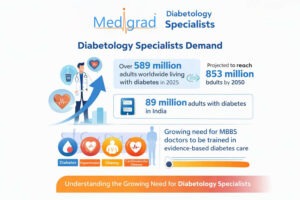
Understanding the Growing Need for Diabetology Specialists
According to the International Diabetes Federation (IDF) Diabetes Atlas 2025, around 589 million adults aged 20–79 years are living with diabetes worldwide, and this number is projected to reach approximately 853 million by 2050. India alone has more than 89 million adults living with diabetes, making it one of the countries with the highest diabetes burden globally and increasing the demand for doctors trained in evidence-based diabetes care.
As the burden of diabetes continues to grow, MBBS doctors increasingly encounter patients with diabetes, hypertension, obesity, cardiovascular disease, and metabolic disorders in routine clinical practice. Structured diabetology training helps doctors confidently diagnose, manage, and monitor these complex conditions using evidence-based approaches.
Fellowship vs Certification in Diabetology: Quick Comparison
| Feature | Fellowship | Certification |
| Goal | Advanced specialization | Skill enhancement |
| Ideal For | Seeking specialization | Seeking quick upskilling |
| Duration | 12 months | 3–6 months |
| Learning | Online + hospital training | Mostly online |
| Depth | Comprehensive | Fundamental |
| Clinical Training | Hospital-based | Mostly theory |
| Career Focus | Advanced diabetes care | Routine diabetes management |
| Commitment | Higher | Lower |
| Best For | Long-term career growth | Flexible learning |
While both pathways improve diabetes management skills, fellowship programs are generally better suited for doctors seeking advanced specialization, whereas certification programs are ideal for short-term professional upskilling.
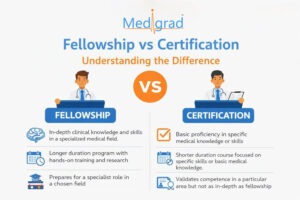
Fellowship vs Certification: Understanding the Difference
Both fellowship and certification programs help doctors enhance their knowledge of diabetes management, but they differ significantly in learning depth, duration, practical exposure, and long-term career objectives. Understanding these differences can help you choose a program that aligns with your current practice and future professional goals.
A Fellowship in Diabetology is generally intended for MBBS doctors seeking advanced clinical knowledge, structured learning, and practical hospital exposure where available. Certification programs, on the other hand, focus on strengthening foundational diabetes management skills through shorter and more flexible learning.
For example, Medigrad offers a 12-month Fellowship in Diabetology with 4 weeks of practical hospital training, while its 6-month Certificate Course in Diabetes Management is designed for doctors seeking flexible online upskilling.
Practical Clinical Training
Practical clinical exposure is often one of the biggest deciding factors when comparing fellowship and certification programs.
Many certification courses primarily focus on theoretical concepts delivered through online lectures, recorded sessions, reading material, and assessments. This format offers flexibility and allows working doctors to study at their own pace.
Some fellowship programs also incorporate structured hospital-based clinical training. Practical exposure may include observing experienced clinicians, interacting with patients, interpreting investigations, discussing treatment planning, and understanding multidisciplinary diabetes care in real-world settings.
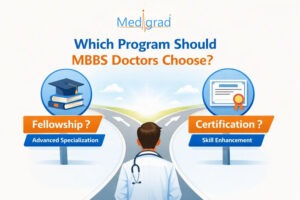
Which Program Should MBBS Doctors Choose?
The right choice depends on your current level of experience, career aspirations, and the type of clinical practice you plan to build.
A Certification in Diabetology may be more suitable if you:
- Want to strengthen your understanding of diabetes management fundamentals.
- Prefer a shorter learning commitment.
- Need flexible online learning while continuing clinical practice.
- Wish to build confidence in managing routine diabetes cases.
A Fellowship in Diabetology may be more suitable if you:
- Plan to develop advanced expertise in diabetes care.
- Want a structured and comprehensive curriculum.
- Value practical clinical exposure where available.
- Intend to manage more complex diabetes cases.
- Are looking for long-term professional development in diabetology.
Common Mistakes Doctors Make While Choosing a Program
Selecting a program based only on course duration or fees may not always lead to the best learning outcome. Before enrolling, consider evaluating:
- Curriculum depth
- Faculty experience
- Clinical training opportunities
- Assessment methodology
- Learning resources
- Institutional credibility
- Continuing academic support
- Alignment with your career goals
Taking time to compare these factors can help ensure that the program supports both immediate learning needs and long-term professional growth.
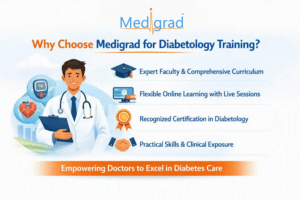
Why Choose Medigrad for Diabetology Training?
Medigrad offers both a Fellowship in Diabetology and a Certificate Course in Diabetes Management, enabling MBBS doctors to choose a learning pathway based on their experience, career goals, and preferred learning format.
Key features of Medigrad’s diabetology programs include:
– 12-month Fellowship with 4 weeks of hospital training
– 6-month online Certificate Course
– Flexible blended learning
– Experienced clinician-led faculty
– Practical, evidence-based curriculum
– Learning without interrupting clinical practice
Whether you are looking for advanced specialization or short-term upskilling, Medigrad provides structured medical education designed for practicing doctors.
Frequently Asked Questions
Is a fellowship better than a certification in diabetology?
Neither is universally better. A fellowship generally offers more comprehensive academic and clinical training, while a certification focuses on building foundational diabetes management skills in a shorter timeframe. The right choice depends on your career goals and learning needs.
Can MBBS doctors pursue both a certification and a fellowship?
Yes. Some doctors begin with a certification to strengthen their fundamentals and later pursue a fellowship for more advanced clinical learning.
Does every fellowship include hospital training?
No. Practical training varies among institutions. Doctors should review the official program structure before enrolling.
Is a certification enough for general clinical practice?
For many doctors, a certification can enhance confidence in diagnosing and managing common diabetes cases encountered in everyday practice. However, those seeking advanced specialization may consider a fellowship.
Which program is better for working doctors?
Both can be suitable. Certification programs often provide greater flexibility due to their shorter duration, while many fellowship programs also offer blended learning models that allow doctors to continue clinical practice alongside their studies.
How should I decide between the two?
Consider your career objectives, available study time, interest in advanced clinical practice, preferred learning format, and the depth of knowledge you want to acquire before choosing a program.
About the Author
The Medigrad Academic Team creates educational content to support MBBS doctors and healthcare professionals in their learning journey. Working with experienced clinicians and medical educators, we focus on developing accurate, practical, and up-to-date resources based on current medical knowledge and clinical practice.
Reference:
International Diabetes Federation (IDF). IDF Diabetes Atlas, 11th Edition (2025)

