
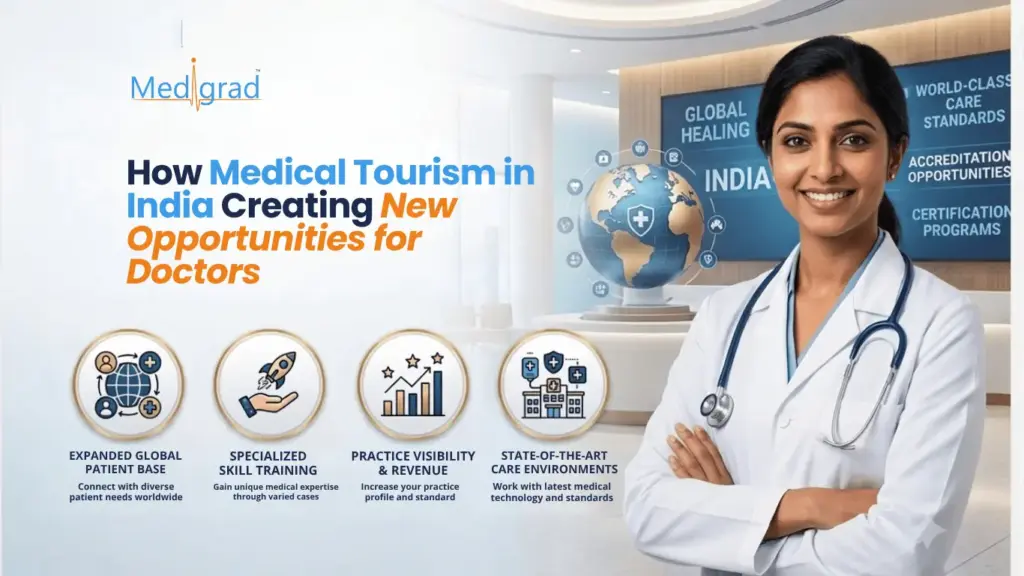
India’s healthcare sector is becoming increasingly connected to global demand for medical care. International patients travel to India for a range of treatments and healthcare services, supported by specialist hospitals, experienced clinicians, advanced technology and comparatively competitive costs for selected treatments.
The Government of India PIB reported 507,244 foreign nationals arriving in India specifically for medical treatment in 2025. In September 2026, the Ministry of Commerce and Industry also highlighted the importance of trained caregivers, wider hospital participation and quality-focused expansion of India’s medical value tourism ecosystem.
What Is Medical Tourism?
Medical tourism refers to travelling to another country to receive medical treatment or healthcare services. The broader term Medical Value Travel (MVT) is also used because the patient’s journey can involve treatment as well as healthcare coordination, travel, accommodation and related support services.
In India, the medical value travel ecosystem brings together hospitals, doctors, nurses, diagnostic services, international patient departments, medical travel facilitators, insurers, government agencies and other healthcare professionals involved in supporting international patients.
What Opportunities Does Medical Tourism Create for Doctors?
1. Greater Exposure to International Patients
Doctors working in hospitals that treat international patients may encounter patients from different countries, healthcare systems and cultural backgrounds.
This can provide exposure to different:
- Medical histories and documentation styles
- Patient expectations
- Communication preferences
- Healthcare practices
- Follow-up requirements
- Multidisciplinary care pathways
2. Growing Importance of Specialized Clinical Skills
International patients may seek care for complex or specialized medical conditions.
Depending on the hospital and patient population, doctors may work across areas such as:
- Cardiology
- Critical care
- Emergency medicine
- Internal medicine
- Diabetes care
- Pediatrics
- Neonatology
- Obstetrics and gynecology
- Diagnostic and imaging-related services
3. International Patient Care Requires More Than Clinical Knowledge
Treating an international patient involves more than diagnosis and treatment.
Doctors may also need to communicate clearly about:
- Diagnosis and treatment options
- Expected investigations
- Risks and benefits
- Treatment timelines
- Discharge instructions
- Follow-up care
- When the patient should seek further medical attention
4. Opportunities Beyond Traditional Clinical Roles
Medical tourism also supports a wider healthcare ecosystem.
Doctors may interact with or contribute to areas such as:
- International patient departments
- Telemedicine and remote consultations
- Clinical case coordination
- Multidisciplinary treatment planning
- Hospital quality initiatives
- Medical documentation
- Patient education
- Clinical leadership
- Healthcare research and education
What Skills Can Doctors Develop for International Patient Care?
Doctors do not necessarily need a separate “medical tourism qualification” to treat international patients. Their professional registration, clinical qualifications, scope of practice and the requirements of their employer or jurisdiction remain important.
However, doctors can strengthen relevant capabilities through continuing education and clinical experience.
Useful areas include:
Clinical specialization: Building deeper knowledge in a chosen discipline can support the management of patients with more specialized needs.
Communication: Clear explanations, informed discussions and culturally appropriate communication are important when patients and families come from different backgrounds.
Multidisciplinary collaboration: International patient care may involve several specialists and healthcare departments working together.
Digital healthcare: Teleconsultation and digital communication can support parts of the patient journey before or after treatment, subject to applicable laws and professional requirements.
Patient-centered care: Understanding the patient’s expectations, concerns and need for continuity of care can improve communication and coordination.
Continuous medical education: Healthcare knowledge and clinical practices evolve continuously. Structured learning can help doctors maintain and expand their knowledge after their foundational medical qualification.
Can MBBS Doctors Benefit From the Growth of Medical Tourism?
The growth of medical tourism can create opportunities for doctors across different stages of their careers, but the type of opportunity depends on a doctor’s qualifications, registration, clinical experience and the requirements of the healthcare organization.
For an MBBS doctor, one practical way to prepare is to develop stronger knowledge in a specific area of medicine rather than relying only on broad foundational training. This can be particularly relevant for doctors who want to build their careers in hospitals, clinical services or healthcare settings that manage patients with specialized needs.
Medical fellowships and certification programs can be one pathway for eligible doctors who want to pursue focused learning after MBBS. The appropriate pathway depends on the doctor’s existing qualifications, career objectives and the eligibility criteria of the individual program.
How Can Fellowships Support Doctors in Medical Tourism?
As India’s medical tourism sector develops, doctors may benefit from building focused knowledge in clinical areas that are relevant to the patients and healthcare settings they serve. A fellowship after mbbs can provide structured learning in a specific clinical discipline, helping eligible doctors strengthen their knowledge beyond their foundational medical qualification.
For example, doctors interested in areas such as diabetology course, critical care course, cardiology course, internal medicine course, emergency medicine course, pediatrics course or neonatology course can explore fellowship pathways that align with their professional interests and career goals.
Medigrad offers fellowship programs for eligible doctors across selected clinical disciplines, with programs designed to provide structured learning in specific areas of medicine. Depending on the individual fellowship, the learning experience may combine online education with practical or hospital-based training, where applicable.
Doctors should review the specific eligibility, curriculum, duration and clinical-training details of each program before enrolling.
Frequently Asked Questions
What is medical tourism in India?
Medical tourism in India refers to international patients travelling to India to receive medical treatment or healthcare services. The broader term Medical Value Travel (MVT) can include treatment as well as related services such as patient coordination, travel, accommodation and follow-up support.
How does medical tourism create opportunities for doctors in India?
Medical tourism can create opportunities within hospitals and healthcare organizations that serve international patients. Depending on the doctor’s qualifications and role, these may include clinical care, multidisciplinary coordination, international patient services, telemedicine, patient education and healthcare leadership.
Can MBBS doctors explore opportunities related to medical tourism?
Potential opportunities depend on the doctor’s clinical experience, registration, qualifications, employer requirements and applicable regulations. MBBS doctors may also explore appropriate continuing-education pathways to build knowledge in selected clinical areas, subject to individual program eligibility.
Can a fellowship help doctors build skills for international patient care?
A fellowship is not a mandatory requirement for medical tourism. However, for eligible doctors, structured education in a selected clinical discipline may help develop additional knowledge relevant to their professional goals and scope of practice.
Does Medigrad offer medical tourism courses for doctors?
Medigrad offers fellowship and certification programs for eligible doctors across selected clinical disciplines. Completing a relevant fellowship can help doctors build focused clinical knowledge, strengthen skills and support their professional development, which can be valuable when working in healthcare settings that serve diverse and international patients.

