
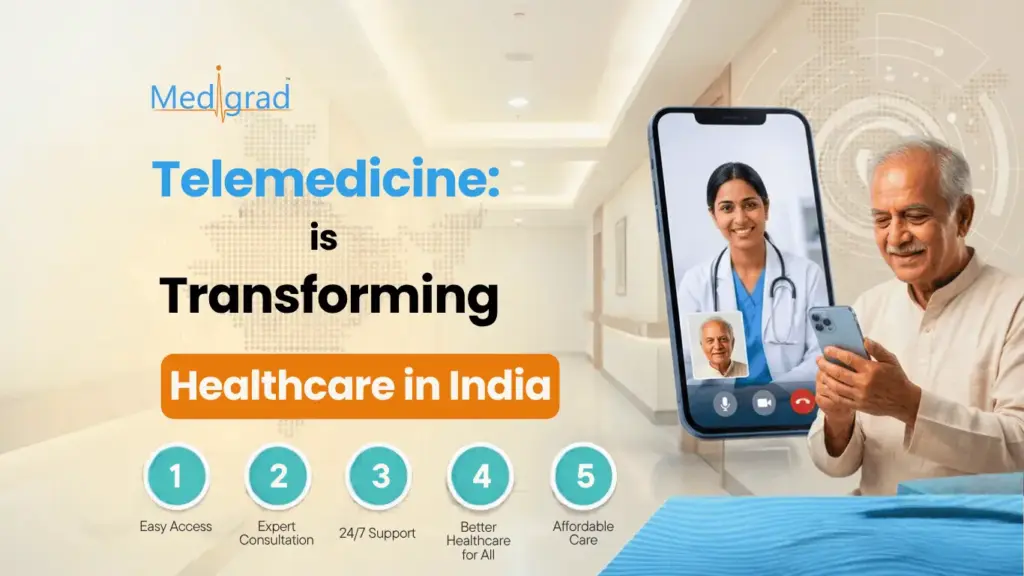
Telemedicine has changed how healthcare can be accessed and delivered, allowing patients and doctors to connect remotely through video, audio and other digital technologies. Telemedicine in India, has expanded across primary care, specialist consultations, follow-ups and healthcare services in areas where access to medical facilities may be limited.
The growth of telemedicine offers important benefits, but it also has limitations. Understanding the benefits of telemedicine, its advantages and disadvantages, clinical limitations and future role can help both patients and healthcare professionals make better-informed decisions about when remote healthcare is appropriate.
What Is Telemedicine?
Telemedicine is the delivery of healthcare services through electronic communication and information technologies when the doctor and patient are in different locations.
Depending on the situation, telemedicine may involve:
- Video or audio consultations
- Follow-up consultations
- Review of medical reports
- Health education and counselling
- Specialist consultations
- Remote monitoring and coordination of care
Telehealth is a broader concept that can include telemedicine along with remote monitoring, healthcare education, professional training and other technology-enabled healthcare activities.
How Does Telemedicine Work in India?
A telemedicine consultation generally involves identifying the patient and registered medical practitioner, selecting an appropriate communication method, collecting relevant medical information and deciding whether remote consultation is suitable.
The Indian Telemedicine Practice Guidelines emphasize that the professional judgment of the registered medical practitioner should determine whether technology-based consultation is sufficient or whether an in-person consultation is required.
A typical process may include:
- Booking or initiating a consultation
- Identifying the patient and doctor
- Taking the relevant medical history
- Reviewing available reports or records
- Assessing whether remote consultation is appropriate
- Providing advice or management when appropriate
- Arranging follow-up or in-person evaluation when necessary
Benefits of Telemedicine
The benefits of telemedicine include improved healthcare access, convenience and continuity of care when remote consultation is clinically appropriate.
- Better healthcare access: Connects patients with doctors without requiring travel for every consultation.
- Saves time and travel: Reduces travel time and related costs for suitable consultations and follow-ups.
- Specialist access: Helps patients connect with specialists who may not be available locally.
- Convenient follow-ups: Supports selected follow-up consultations when physical examination is not required.
- Supports underserved areas: Can improve access to healthcare in rural and geographically remote locations.
Telemedicine Advantages and Disadvantages
The main advantages and disadvantages of telemedicine can be summarized as follows:
Advantages | Disadvantages |
| Improves access to healthcare | Limited physical examination |
| Reduces travel for suitable consultations | Depends on technology and connectivity |
| Can improve specialist access | Digital literacy can be a barrier |
| Supports selected follow-up care | Privacy and data-security concerns |
| Can save time and indirect costs | Not suitable for every clinical situation |
| Supports remote healthcare delivery | Technical problems can interrupt consultations |
Limitations and Challenges of Telemedicine
Although telemedicine offers several benefits, it also has limitations that can affect its suitability in certain situations.
- Limited physical examination: Remote consultations cannot replace every aspect of an in-person physical examination.
- Technology and connectivity: Poor internet, device limitations and technical issues can affect consultation quality.
- Digital literacy: Some patients may need support using digital healthcare platforms.
- Privacy and data security: Protecting patient information is an important consideration in digital healthcare.
- Not suitable for every condition: Some cases require physical examination, diagnostic tests, procedures or urgent hospital care.
- Doctor-patient communication: Remote consultations may make certain aspects of communication and rapport more challenging.
Telemedicine Guidelines in India
India introduced the Telemedicine Practice Guidelines in 2020, providing a framework for registered medical practitioners conducting telemedicine consultations.
The guidelines address areas including:
- Patient and doctor identification
- Consent
- Communication methods
- Patient evaluation
- Consultation type
- Patient management
- Appropriate use of technology
An important principle is that the registered medical practitioner should determine whether telemedicine is appropriate in a particular situation or whether an in-person assessment is necessary. The standard of care should be maintained within the inherent limitations of telemedicine.
Doctors should always refer to the latest applicable professional and regulatory requirements rather than relying on outdated online information.
Challenges of Telemedicine in India
The growth of telemedicine in India also depends on overcoming several challenges.
Digital divide: Differences in internet access, devices and digital literacy can limit adoption.
Healthcare infrastructure: Reliable connectivity, suitable technology and digital systems are needed for consistent telemedicine services.
Professional training: Healthcare professionals may need training in digital consultation workflows, communication, documentation, privacy and recognizing when an in-person assessment is required.
Data privacy: Healthcare organizations need appropriate safeguards for sensitive patient information.
Medico-legal concerns: Doctors and healthcare organizations must understand their professional responsibilities and applicable regulatory requirements.
A review of telemedicine implementation in India identified digital literacy, connectivity, provider training, infrastructure, medico-legal concerns and data security among important barriers, while training, clear guidelines and investment in infrastructure can support adoption.
Telemedicine and Medical Education
The impact of digital healthcare also extends beyond patient consultations. Technology can support online medical courses, tele-education, virtual case discussions and professional development for healthcare workers.
For doctors, combining specialty-focused knowledge with awareness of digital healthcare can be useful as healthcare delivery models continue to evolve.
Doctors interested in structured specialty-focused education after MBBS can consider additional professional learning such as medical fellowship programs, depending on their eligibility and career goals.
Medigrad Fellowship Programs for Doctors
As healthcare increasingly combines in-person care with digital healthcare and telemedicine, doctors can benefit from developing strong specialty knowledge alongside awareness of technology-enabled healthcare.
Medigrad offers online and blended fellowship programs for eligible MBBS doctors in specialties including Diabetology, Cardiology, Critical Care Medicine, Internal Medicine, Emergency Medicine, Family Medicine, Genecology & Obstetrics and Pediatrics, among others.
These programs provide continuing medical education, with online learning and practical or hospital-based training depending on the program. Doctors can review the program’s eligibility, curriculum, duration and training format to choose an option aligned with their professional goals.
What Is the Future of Telemedicine in India?
The future of telemedicine is likely to involve greater integration between remote and in-person healthcare rather than complete replacement of traditional healthcare.
Important areas of development may include:
- Remote patient monitoring
- Digital health records
- Specialist consultations across locations
- Chronic disease follow-up
- Connected healthcare devices
- AI-supported healthcare technologies
- Digital health platforms
- Tele-education for healthcare professionals
- Greater integration of digital and hospital-based care
India’s experience with telemedicine demonstrates its potential to improve healthcare access, but research also highlights the need for stronger infrastructure, digital literacy, professional training, privacy safeguards and evidence on long-term outcomes.
The future is therefore less about telemedicine versus traditional healthcare and more about using each model where it is most appropriate.
Frequently Asked Questions
What are the benefits of telemedicine?
The main benefits of telemedicine include improved healthcare access, reduced travel, greater convenience, specialist access and support for appropriate follow-up care.
What are the advantages of telemedicine?
Advantages of telemedicine include convenient access to doctors, reduced travel, potential time and cost savings, specialist access and support for healthcare delivery across geographic locations.
What are the disadvantages of telemedicine?
The disadvantages of telemedicine include limited physical examination, technology and connectivity problems, digital literacy barriers, privacy concerns and limited suitability for certain clinical conditions.
What are the limitations of telemedicine?
The main limitations include the inability to perform a complete physical examination remotely, dependence on technology, communication challenges and the need for in-person assessment in certain clinical situations.
What is the difference between telemedicine and telehealth?
Telemedicine generally refers to remote clinical healthcare services, while telehealth is a broader term that can include telemedicine, remote monitoring, healthcare education, professional training and other digital healthcare activities.
Is telemedicine suitable for every patient?
No. Telemedicine is not suitable for every clinical situation. A registered medical practitioner should determine whether remote consultation is appropriate or whether an in-person assessment is needed.
What skills do doctors need for telemedicine?
Doctors need clinical judgment, communication skills, digital-health awareness, knowledge of remote consultation workflows, appropriate documentation practices and an understanding of when an in-person assessment is required.

