
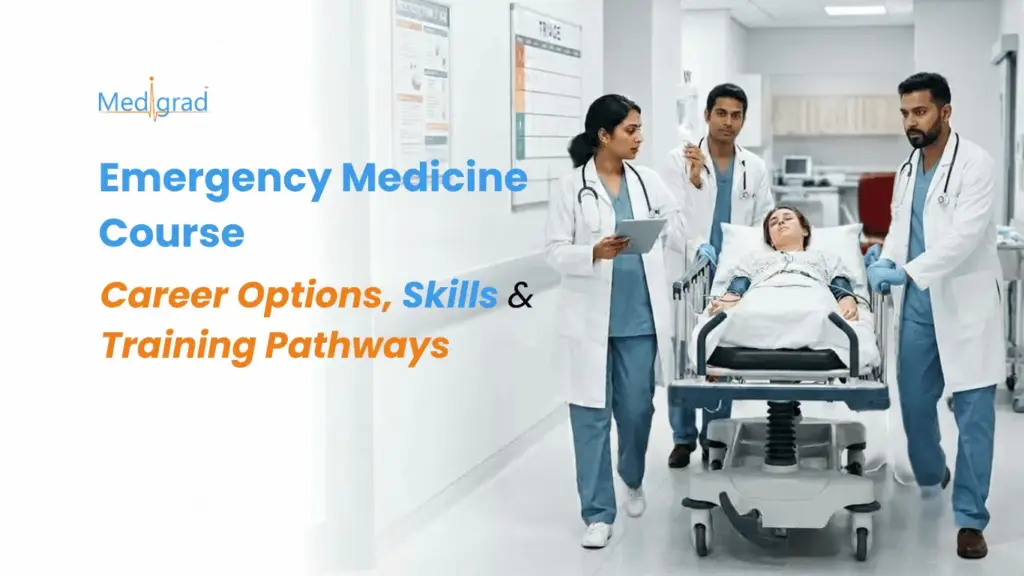
Doctors researching an emergency medicine certificate course after MBBS will find different training pathways, including postgraduate programs, fellowships, certificate courses, and online or blended learning.
The right choice depends on what a doctor wants to learn, the level of clinical exposure required, the learning format, and the professional pathway they intend to pursue.
What Does an Emergency Medicine Fellowship Course Cover?
An emergency medicine fellowship course generally covers the assessment and management principles used in acute and time-sensitive clinical situations.
Depending on the program, learning may include:
- Emergency patient assessment and prioritization
- Trauma and acute medical conditions
- Cardiovascular and respiratory emergencies
- Resuscitation principles
- Emergency investigations and clinical interpretation
- Triage and escalation
- Airway management and emergency procedures
- Management of common medical emergencies
- Communication and multidisciplinary teamwork
- Clinical decision-making in acute-care settings
What Training Pathways Can Doctors Consider After MBBS?
There is no single emergency medicine pathway for every doctor. Depending on their objective, doctors may consider:
Postgraduate Training
Doctors seeking formal specialist education can explore applicable postgraduate pathways in emergency medicine, subject to the relevant admission and regulatory requirements.
Fellowship Programs
An EM fellowship provides structured additional education in a focused clinical area. Depending on the program, it may combine academic learning with practical or hospital-based exposure.
Certificate and Medical Emergency Courses
A shorter medical emergency course may focus on selected emergency-care topics or specific professional development needs.
Online Emergency Medicine Courses
Online emergency medicine courses can provide flexible access to lectures, case-based learning, assessments, and other academic content. Doctors should check whether the program also includes supervised practical exposure, as online learning and clinical training serve different educational purposes.
What Skills Can Doctors Develop Through Emergency Medicine Training?
Emergency medicine education can help doctors develop knowledge and skills related to:
- Rapid and structured patient assessment
- Clinical prioritization and triage
- Recognition of time-sensitive conditions
- Trauma and acute-care management
- Emergency investigations and clinical interpretation
- Resuscitation and stabilization principles
- Airway assessment and management
- Team-based communication and multidisciplinary coordination
- Reassessment and escalation of care
- Clinical decision-making in acute-care settings
The specific competencies depend on the curriculum and the amount of supervised clinical exposure provided by the program.
What Career Settings Can Emergency Medicine Training Support?
Emergency medicine training can be relevant to doctors working or seeking experience in settings such as:
- Hospital emergency departments
- Acute-care services
- Trauma-care environments
- Urgent-care settings
- Multispecialty hospitals
- Healthcare organizations with emergency-care services
However, the roles and responsibilities a doctor can undertake depend on their underlying medical qualification, registration, clinical experience, employer requirements, and applicable regulations.
Can Foreign Doctors Pursue an Emergency Medicine Course in India?
Yes. Foreign doctors can pursue Medigrad’s Fellowship in Emergency Medicine through its 12-month online format. For international doctors, the program requires a minimum of 2 years of experience in Emergency Medicine.
Before enrolling, foreign doctors should check:
- Eligibility: A medical qualification and at least 2 years of Emergency Medicine experience are required.
- Learning format: For foreign doctors, the Medigrad fellowship is delivered online over 12 months and does not include hospital-based training in India.
- Documents: Applicants should provide the required medical qualification, professional registration, identity, and experience documents.
- Qualification: Doctors should understand what the fellowship certificate represents and how it may be used professionally.
- Recognition: Doctors planning to use the qualification in their home country should check acceptance with the relevant medical regulator, licensing authority, or employer.
For foreign doctors looking for flexible online emergency medicine courses, an online fellowship can allow them to continue their professional work while completing structured academic training.
The fellowship should also be distinguished from medical practice in India. Completing an online emergency medicine fellowship does not automatically grant permission to practice medicine in India. Foreign medical graduates seeking registration to practice in India must meet the applicable regulatory requirements, including the Foreign Medical Graduate Examination (FMGE) where applicable.
Doctors should also verify whether the fellowship is recognized or accepted for their intended purpose in their home country, as requirements vary between countries.
What Makes Medigrad’s Emergency Medicine Fellowship Different?
Medigrad’s Fellowship in Emergency Medicine combines both academic learning and practical exposure through a 12-month blended program, including 3 months of training at partnered hospitals. This allows eligible post-MBBS doctors to complement online academic learning with supervised hospital-based experience.
The fellowship includes structured modules, interactive academic sessions, case discussions, multimedia learning content, and practical workshops. Key areas include emergency patient assessment, trauma, medical emergencies, investigations, resuscitation principles, and clinical decision-making.
Medigrad’s Fellowship in Emergency Medicine is an additional educational pathway. It does not replace an MD, MS, or DNB qualification or independently change a doctor’s existing scope of practice.
Frequently Asked Questions
Are online emergency medicine courses useful for doctors?
Yes. Online emergency medicine courses provide flexible learning through lectures, case discussions, assessments, and other digital learning resources, allowing doctors to build their knowledge while continuing their professional work.
Can I pursue an emergency medicine fellowship while working?
Some emergency medicine fellowships are designed for working doctors through online or blended learning. Medigrad’s Fellowship in Emergency Medicine combines flexible academic learning with practical hospital training, allowing eligible doctors to continue their clinical practice alongside the program.
What skills can doctors develop through emergency medicine training?
Emergency medicine training can help doctors develop skills in acute patient assessment, triage, trauma care, resuscitation, emergency investigations, stabilization, and clinical decision-making.
Can foreign doctors take an emergency medicine course in India?
Yes. Foreign doctors can pursue Medigrad’s 12-month online Fellowship in Emergency Medicine, subject to the program’s eligibility requirements, including a minimum of 2 years of Emergency Medicine experience. The foreign-doctor pathway does not include hospital-based training in India.
Will a Medigrad emergency medicine fellowship be recognized in my home country?
Medigrad’s emergency medicine fellowship programs carry CPD Standards Office (UK) and AACME accreditation, providing internationally recognized educational quality assurance. CPD is used across regions including the UK, Europe, North America, Australia, New Zealand, the Middle East, Asia, and Africa. However, acceptance for licensing, employment, or professional registration depends on the requirements of the relevant authority or employer in each country.

