
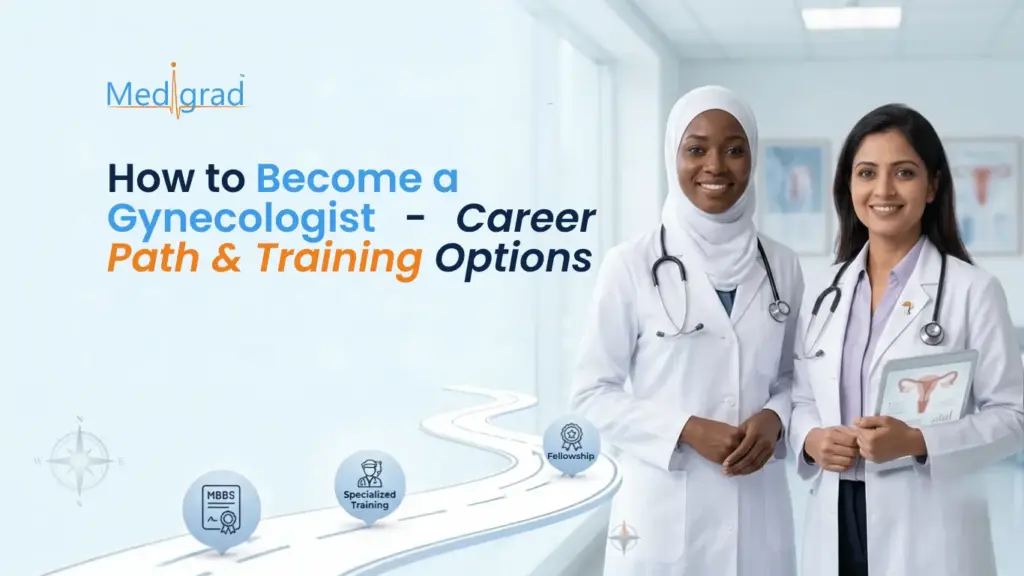
Completing MBBS gives doctors a broad foundation in clinical medicine, but many graduates want to develop deeper expertise in a particular specialty. Gynecology is one such career pathway, covering women’s reproductive health, pregnancy, childbirth, fertility, menstrual disorders, and other conditions affecting the female reproductive system.
If you are an MBBS doctor considering gynecology specialization, it is important to understand the available education and training pathways, what each qualification is designed for, and how they fit into your long-term career plans.
How to Become a Gynecologist After MBBS in India?
For doctors who want to pursue formal postgraduate specialization in Obstetrics & Genecology, the conventional pathway is:
MBBS → Postgraduate entrance examination → MD/MS in Obstetrics & Genecology → Further focused training, if required
The National Medical Commission’s postgraduate regulations specify a three-year duration for broad-specialty postgraduate degree training after MBBS.
1. Complete Your MBBS
MBBS is the foundation for pursuing postgraduate medical education in India. During MBBS and internship, doctors develop knowledge and clinical exposure across multiple specialties.
After completing MBBS, you can assess which specialty matches your clinical interests and career goals.
2. Pursue Postgraduate Training in Obstetrics & Genecology
Doctors who want formal specialist training in Obstetrics & Genecology generally pursue a recognized postgraduate qualification through the applicable postgraduate admission pathway.
Postgraduate training provides structured clinical education in areas such as:
- Antenatal and postnatal care
- Labor and delivery
- Obstetric emergencies
- Gynecological disorders
- Reproductive health
- Infertility
- Gynecological procedures and surgery
- High-risk pregnancy management
Can You Study Gynecology After MBBS Without Doing MD/MS?
This is an important distinction for MBBS doctors.
There are courses after mbbs, certificate and continuing medical education programs that allow eligible doctors to develop focused knowledge and skills in areas such as women’s health, gynecology and obstetrics.
However, these programs should not be confused with a recognized postgraduate specialist qualification. A fellowship can provide focused education and clinical learning, but its scope, eligibility, certification and clinical training vary by provider.
Therefore, an MBBS doctor should choose a program based on their existing qualification, intended scope of practice, learning objectives and career plans.
What Training Options Are Available After MBBS?
Your choice depends on where you are in your career and what you want to achieve.
Postgraduate specialization
For doctors seeking formal specialist training in Obstetrics & Genecology, a recognized postgraduate degree pathway is the conventional route.
Fellowship and focused training
For doctors looking to build knowledge in a particular area alongside their professional development, relevant fellowship or continuing medical education programs may provide structured specialty-focused learning.
For example, Medigrad offers a Fellowship in Gynaecology & Obstetrics for eligible doctors, combining structured online learning with practical/clinical learning components as applicable to the program. The program is designed around areas of gynecological care, obstetric emergencies and women’s health.
Doctors considering such a program should review its eligibility, curriculum, assessment, certification and practical training details before enrolling.
What Does Gynecology Training Cover?
Modern Obstetrics & Genecology covers a wide range of clinical areas. Depending on the qualification or training program, doctors may encounter topics such as:
- Women’s reproductive health
- Menstrual and hormonal disorders
- Antenatal care
- Normal and complicated pregnancy
- Obstetric emergencies
- Infertility and reproductive health
- Gynecological disorders
- Preventive women’s healthcare
- Gynecological procedures
- Maternal and fetal health
More advanced training can also lead doctors toward focused areas such as reproductive medicine, fetal medicine, gynecologic oncology, minimally invasive gynecologic surgery and high-risk pregnancy care.
How to Choose the Right Gynecology Training After MBBS
Before choosing a program, consider these factors:
- Your career objective: Decide whether you are looking for formal postgraduate specialization, focused clinical education, or continuing professional development.
- Eligibility: Check whether the program is specifically designed for MBBS doctors and whether you meet all stated requirements.
- Curriculum: Review whether the subjects and clinical areas match your learning goals.
- Practical exposure: If clinical training is included, understand where it takes place, its duration and what type of supervised exposure is provided.
- Faculty and learning format: Look at faculty credentials, case-based learning, live sessions, assessments and flexibility if you are already practicing.
- Certification and accreditation: Check exactly who awards the certification and what accreditation or academic association applies to the program.
Career Options After Gynecology Training
A doctor’s career options depend on their qualifications, registration, experience and scope of practice. Depending on their training pathway, doctors may work or develop further expertise in settings such as:
- Hospitals
- Women’s health clinics
- Maternal healthcare services
- Fertility and reproductive health settings
- Community healthcare
- Medical education
- Clinical research
- Further postgraduate or focused specialty training
Doctors should also distinguish between gaining additional knowledge in gynecology and obtaining a recognized specialist qualification. Your qualification and applicable regulations determine the roles and scope of practice for which you are eligible.
Gynecology Training for Indian and Foreign Doctors
Indian and foreign medical graduates who want to build further knowledge in Obstetrics & Genecology can consider structured post-MBBS training, online gynecology courses, or fellowship programs. The appropriate option depends on their existing medical qualification, registration status, career goals and the requirements of the country where they intend to practice.
Medigrad’s Fellowship in Gynaecology & Obstetrics is designed for eligible MBBS and above doctors, including doctors seeking structured learning in women’s health, obstetrics and genecology. The 12-month fellowship combines online learning with 4 weeks of training at partnered hospitals.
For international doctors, the program can provide an additional learning pathway, subject to the eligibility and applicable medical licensing requirements in their country. A fellowship should not be considered a replacement for a locally recognized specialist qualification or medical registration.
Frequently Asked Questions
What is the pathway to become a gynecologist after MBBS?
The conventional pathway is to complete MBBS, qualify through the applicable postgraduate admission process and pursue recognized postgraduate training in Obstetrics & Genecology. Further focused training can be considered after or alongside the appropriate qualification, depending on the program and eligibility.
Can MBBS doctors pursue gynecology courses?
Yes. Eligible MBBS doctors can find various continuing medical education, certificate and fellowship programs focused on gynecology and women’s health. However, these should not automatically be considered equivalent to a recognized postgraduate specialist qualification.
What is gynecology specialization after MBBS?
It refers to developing advanced expertise in Obstetrics & Genecology after completing MBBS. Formal specialist training generally involves recognized postgraduate medical education, while additional fellowships and focused programs can support further learning depending on the doctor’s goals.
What should I consider before choosing gynecology training after MBBS?
Consider your career objective, eligibility, curriculum, faculty, practical exposure, assessment method, certification, accreditation and how the program fits with your current clinical practice.
Can I pursue a gynecology fellowship after MBBS?
Some fellowship programs are specifically designed for eligible MBBS doctors. Before enrolling, verify the program’s eligibility, curriculum, clinical training, certification and the distinction between fellowship education and formal postgraduate specialist training.

